![[UI/UX] 導入數位護照於產品|DNP 大日本印刷合作專案](/images/dnp-hotel/Hero.webp)
Digital Passport Check-in — DNP Hotel Project
A collaboration between Turing Certs and Dai Nippon Printing (DNP) to bring digital identity verification into real-world hospitality. I designed the end-to-end experience for travelers to complete hotel kiosk self-check-in using a digital passport VC — eliminating reliance on physical documents and front-desk staff — and led the pre-launch qualitative usability research.
Impact
- Designed the pre-check-in and on-site check-in journey.
- Led qualitative usability testing before launch.
- Reduced uncertainty in a high-pressure kiosk scenario.
- Clarified trust and privacy communication around passport VC.
Background & Business Context
Japanese hotels have long adopted self-service kiosks, but identity verification still requires presenting a physical passport.
Even with self-service kiosks, travelers still need to produce their passport — and this verification is one-time and non-reusable, requiring passport re-verification at every check-in.
Taiwan is one of Japan's largest inbound travel markets:
- Taiwanese travelers alone account for approximately 33,000 hotel check-ins per day in Japan
- DNP's hotel network already covers 1,000+ hotels, providing a foundation for scalable deployment
- The verification action has revenue potential, with hotels paying per successful verification
Taiwanese travelers — characterized by high travel frequency, predominantly independent travel, and mobile-savvy behavior — represent the ideal first market for reusable digital identity.
> Turing Space is fundamentally a company built around digital credential issuance, custody, and verification, with a complete service foundation for issuing, storing, and verifying credentials.
>
> Hotel express check-in is therefore not a standalone feature, but an extension of the existing platform into a high-frequency, real-world use case.
>
> My view: every additional application context like this compounds user acquisition and digital credential volume on top of the existing foundation, strengthening the entire issuance-custody-verification ecosystem.
>
> If the hotel check-in use case succeeds, it opens the door to further expansion into car rental, tax refund, and other applications.
Challenges
1. Digital passport must be simpler and faster to use than a physical passport
1. Sufficient incentive is needed for users to adopt it
1. Travelers must be willing to upload a sensitive document (their passport) to a company or service they may have never heard of
1. Requiring advance passport upload and KYC creates a natural drop-off point in the flow
Design Strategy & Key Decisions
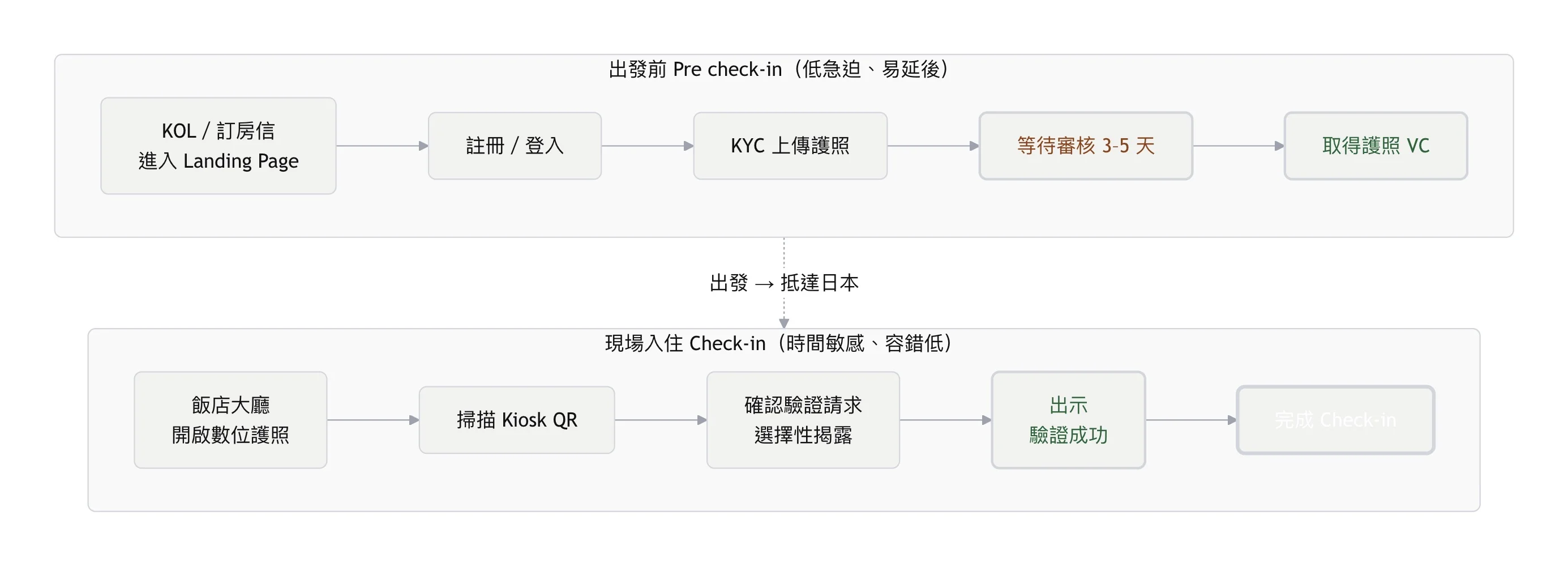
1. Split the Flow into Two Distinct Phases
I deliberately separated the task into two phases with completely different contextual demands:
- Pre-departure → Low urgency, easily ignored
- Design focus: persuasion + guided onboarding to motivate users to complete registration and KYC before they leave
- On-site → Time-sensitive, low tolerance for error
- Design focus: shortest possible path + high certainty — scan and done — with clear confirmation that verification succeeded
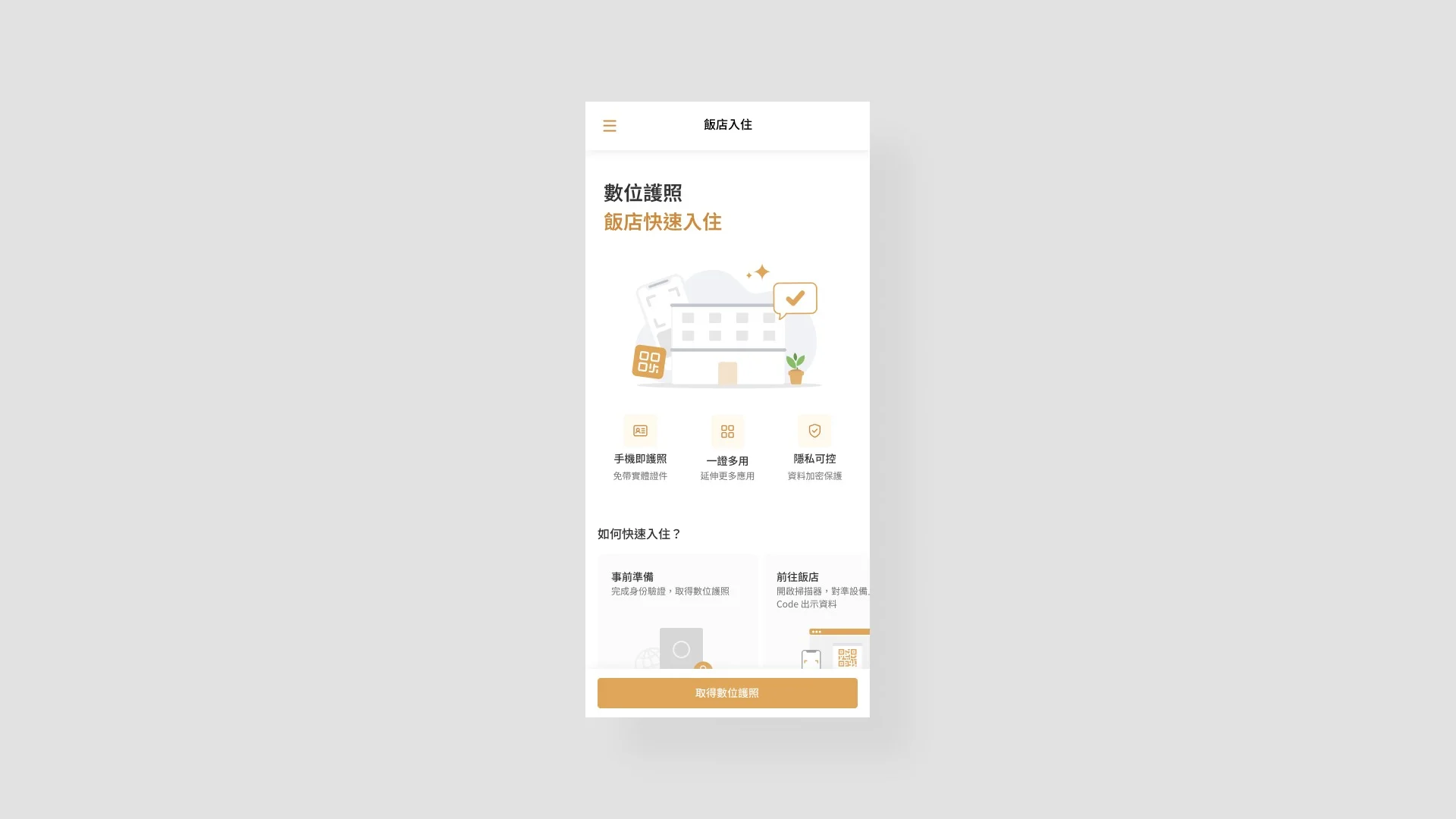
2. Context-Driven Landing Page for User Persuasion
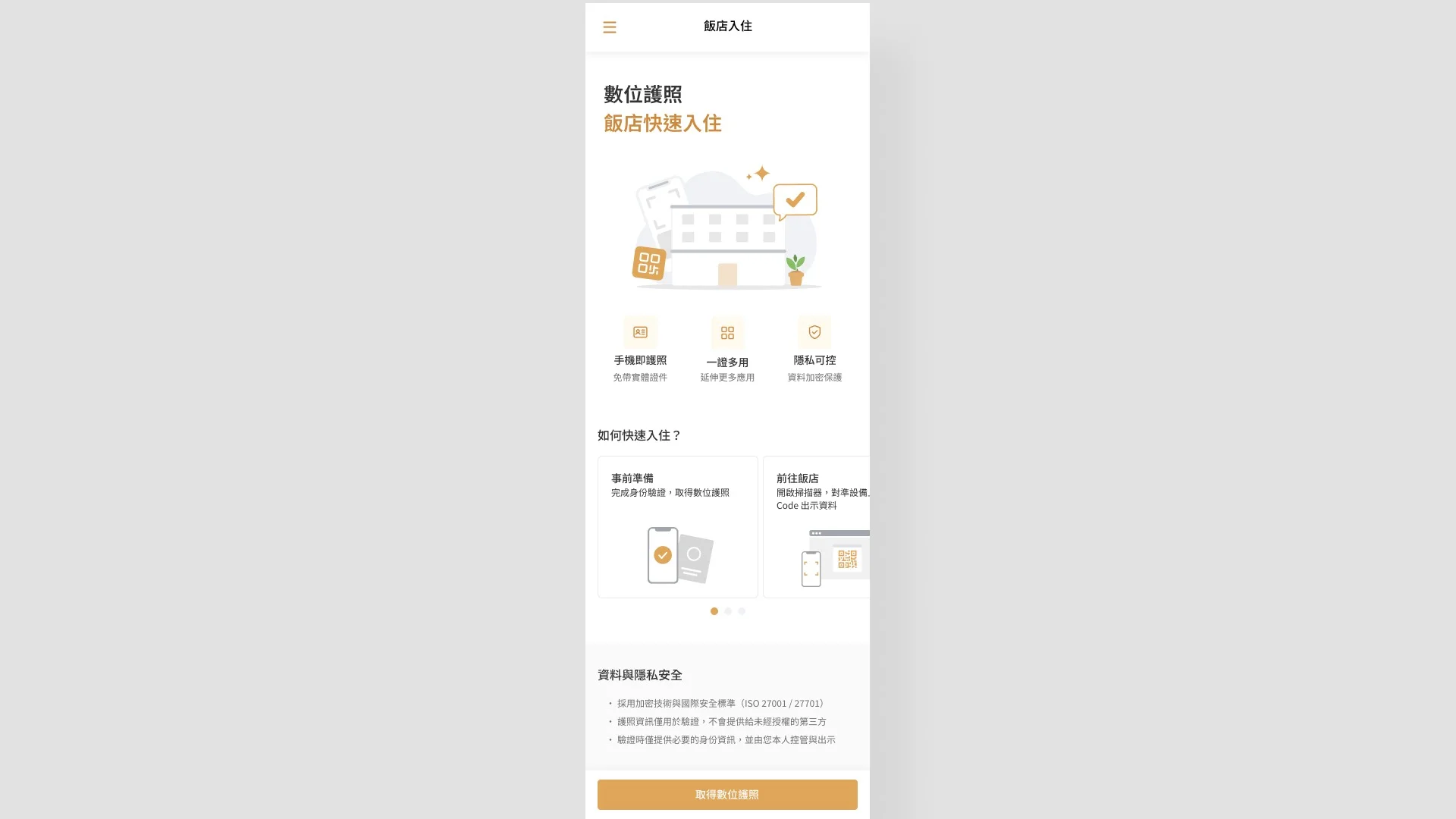
The check-in landing page functions as a reusable persuasion template (the same structural pattern can be applied to future car rental and tax refund contexts).
The page is structured to increase user willingness to adopt:
- Motivation: Explain why the user should care
- How it works: Three simple steps explaining how to use it
- Trust building: Partner hotel brand wall (official endorsement) + privacy statement (data used solely for check-in)
3. Turning the Wait State into Part of the Flow
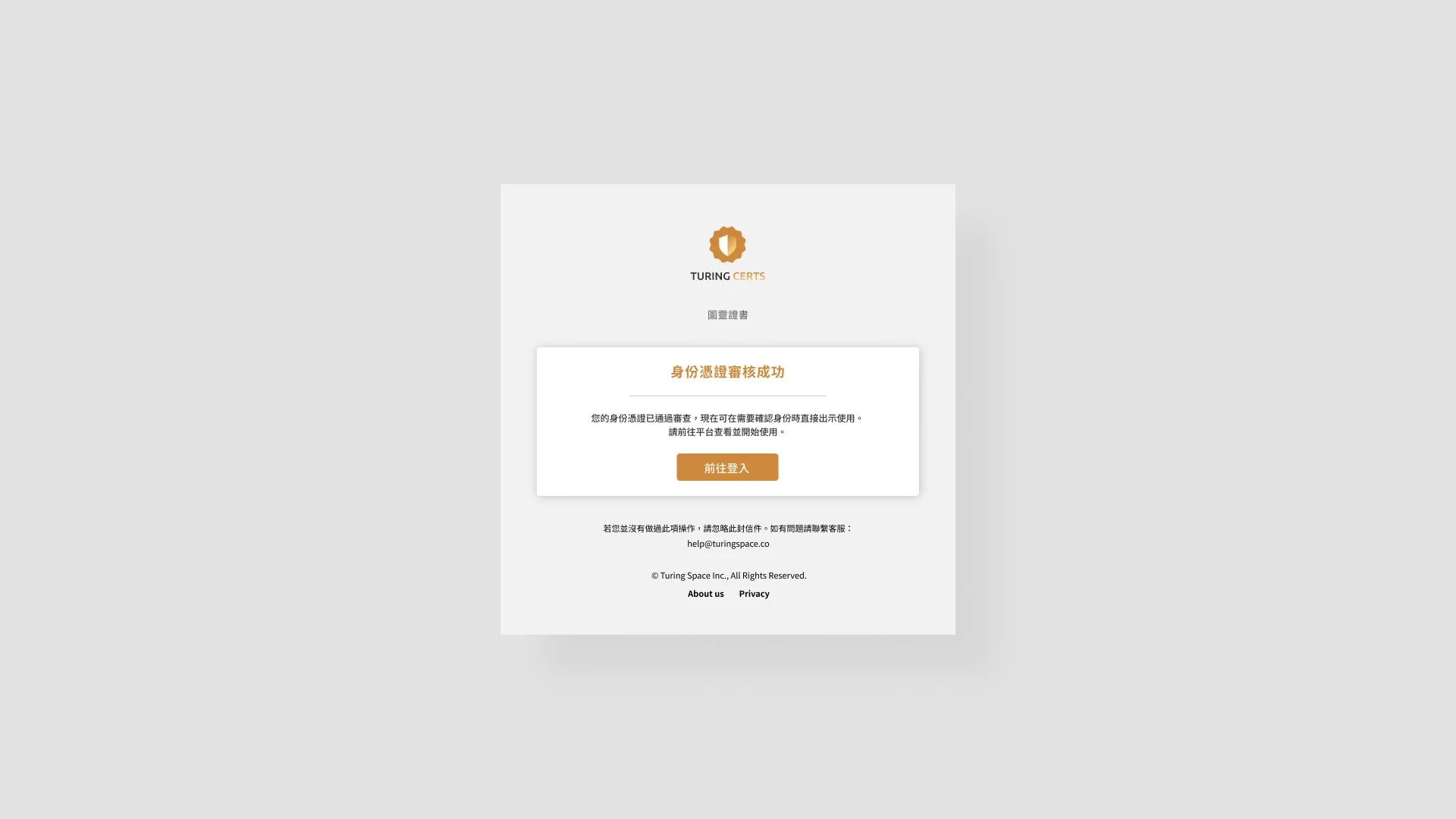
- Active re-engagement touchpoint: An email notification — "Passport verification successful" — sent upon approval to bring users back into the flow
4. Shortest Path for On-Site Use
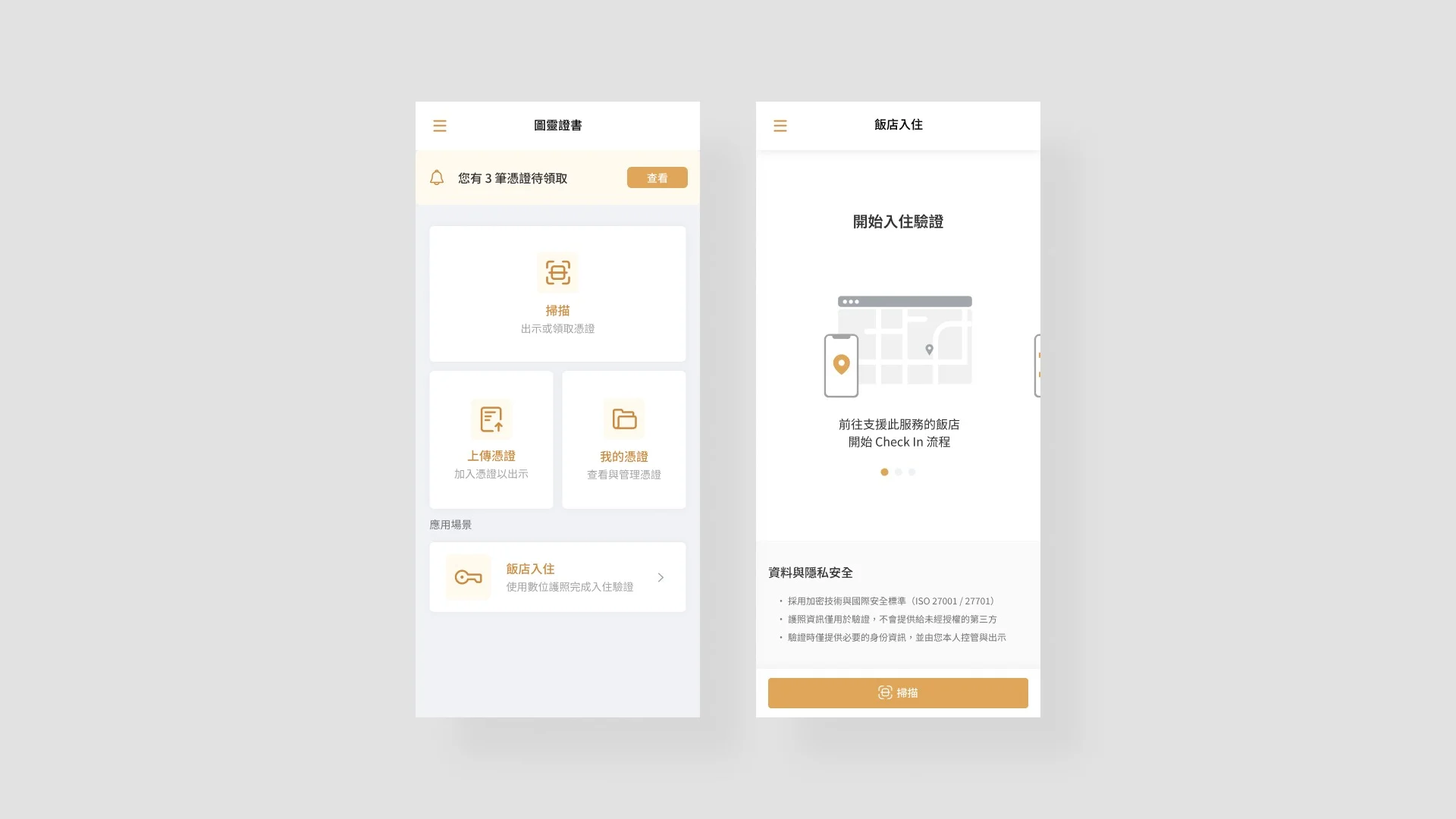
Every additional step on-site is a friction point under the pressure of queuing and time constraints.
Once a user already holds a digital passport, the landing page collapses all explanatory content and elevates the scan function to the highest hierarchy level.
Design Trade-offs
To get the verification feature shipped as quickly as possible, the scope of this version was determined collaboratively — aligning priorities with the PM and evaluating feasibility with engineering — to identify what could be intentionally simplified.
The most significant discussion was:
- The landing page temporarily serves as both a marketing page and a product entry point
- Ideally, the marketing page (responsible for acquisition and persuasion) and the product entry point (for already-converted users) serve different tasks and different users — they should be separate
- To ship a POC quickly and begin validation, this version merges both into a single page
- First validate whether users will actually use it; once the POC is proven, split the product page and marketing page into their proper separate forms
To me, trade-offs are not forced compromises — they are deliberate judgments to keep progress on track. Focus resources on fast validation and POC; defer uncertain decisions to future iterations.
Pre-Launch User Research
I designed and led a qualitative usability study to confirm: whether users would want to use it, trust it, and be able to use it successfully.
Hypothesis Framework: A Motivation / B Trust / C Usability
```mermaid
flowchart TB
A["Willing to start<br/>Awareness → Onboarding"] --> B["Willing to verify<br/>KYC → Credential Issuance"] --> C["Will actually use it<br/>Activation (on-site)"] --> D["Decision rule<br/>All three valid → Ready to launch<br/>Any one invalid → Fix first"]
A -.->|"Hypothesis A: Motivation"| A1["Is there room to improve check-in?<br/>Will they verify in advance for speed?<br/>Does 'reusable' feel meaningful?"]
B -.->|"Hypothesis B: Trust"| B1["Willing to upload passport?<br/>Accept mobile digital identity?<br/>Trust how data is used?"]
C -.->|"Hypothesis C: Usability"| C1["Understand the two-phase flow?<br/>Complete without assistance?<br/>No friction at critical steps?"]
style A fill:#DBEAFE,stroke:#2563EB,stroke-width:2px,color:#1E40AF
style B fill:#DBEAFE,stroke:#2563EB,stroke-width:2px,color:#1E40AF
style C fill:#DBEAFE,stroke:#2563EB,stroke-width:2px,color:#1E40AF
style D fill:#DCFCE7,stroke:#16A34A,stroke-width:2px,color:#166534
style A1 fill:#F9FAFB,stroke:#D1D5DB,color:#374151
style B1 fill:#F9FAFB,stroke:#D1D5DB,color:#374151
style C1 fill:#F9FAFB,stroke:#D1D5DB,color:#374151
img:9.gif
img:8
![[AI Builder] Self-Serve by Design — TCS Website & Dashboard](/images/tcs-dashboard/cover.gif)